How A.I. Tools Could Change India’s Elections
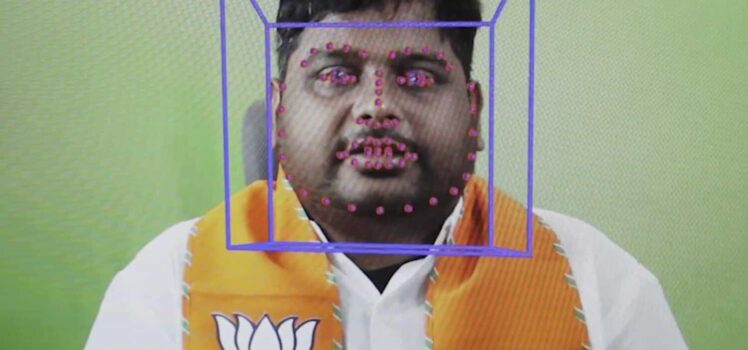
Avatars are addressing voters by name, in whichever of India’s many languages they speak. Experts see potential for misuse in a country already rife with disinformation.
Tools powered by A.I. can create digital replicas of people.CreditCredit…Ahmer Khan for The New York Times
For a glimpse of where artificial intelligence is headed in election campaigns, look to India, the world’s largest democracy, as it starts heading to the polls on Friday.
An A.I.-generated version of Prime Minister Narendra Modi that has been shared on WhatsApp shows the possibilities for hyperpersonalized outreach in a country with nearly a billion voters. In the video — a demo clip whose source is unclear — Mr. Modi’s avatar addresses a series of voters directly, by name.
Political parties are not only texting constituents video messages but also using cloned voices to call people directly, all powered by chatbots like ChatGPT.
In the past, when a party representative would call voters, they would hang up, Mr. Rathore said. “But now, when a local leader utters a voter’s name, it immediately catches their attention.”
During the conversation, the chatbot asks about local government programs that offer free electricity or funding for start-ups. Mr. Jadoun said the calls were recorded and transcribed for quality control and A.I. training.
Mr. Rathore said he had spent around $24,000 of his own money to reach about 1.2 million people through his video messages and phone calls and to receive information about who didn’t answer. He called it an investment in his future with the B.J.P.
Nikhil Pahwa, the editor of MediaNama, which covers digital media in India, said the personalized messages could be particularly powerful among Indians.
“India is a country where people love to take photos with celebrity impersonators,” he said. “So if they receive a call from, say, the prime minister, and he speaks as if he knows them, where they live and what their issues are, they would actually be thrilled about it.”
Mr. Waghre of the Internet Freedom Foundation questions whether A.I. content is persuasive enough to affect this year’s election. But he said the long-term effects could be problematic. “Once you normalize this in people’s information diet, what happens six months later when there are deceptive videos?” he said.
Mr. Modi himself has discussed adding disclaimers to A.I.-generated content so people are not being “misguided.” Mr. Jadoun and representatives of two other A.I. start-ups in India created what they call an “A.I. coalition manifesto,” pledging to protect data privacy and uphold election integrity. For instance, Indian Deepfaker videos are labeled “A.I. generated,” and its chatbots announce that they are A.I.-generated voices, Mr. Jadoun said.
Narendra Singh Bhati, 28, the owner of resorts in Rajasthan, received an A.I.-generated call from Mr. Rathore this week. Mr. Bhati said he was impressed with its personalization.
He said he had not realized that the call was A.I.-generated, although the script made that clear. “I even said goodbye to Mr. Rathore” at the end, Mr. Bhati said.