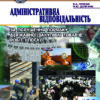
NEW SYSTEMATIC MONOGRAPH BY PROFESSOR VOLODYMYR LIPKAN

V. A. Lipkan
Political principles of the geostrategy of the modern Ukrainian State. monograph. Odesa: Helvetyka Publishing House, 2024. 830 p.
This monograph is the first publication in Ukraine that, utilizing a systematic interdisciplinary approach, investigates the foundations of the formation and implementation of the geostrategy of the modern Ukrainian state from the perspectives of political science, international relations, geo-history, geo-economics, ethno-state studies, national security studies, and cybersecurity.
Geostrategy is conceptualized as a political category, with its theoretical underpinnings defined, and its categorical-conceptual framework constructed. The content and structure of geostrategic discourse are examined.
Particular attention is given to the methodological foundations of geostrategy, including an in-depth analysis of discourse analysis, normativism, natural law theory, concepts of strategic ambiguity and clarity, the anatomy of geostrategic destructiveness, and the humanitarian ethos of the nation.
A political characterization of the geostrategic landscape is provided, uncovering the historical roots of denazification and emphasizing the factors influencing the geostrategy of the modern Ukrainian state. The political principles underpinning the creation of geostrategy as a politico-security practice are outlined. Approaches to conceptualizing national resilience are developed, along with a model of political readiness as a critical component of geostrategy.
The practical application of geostrategy is demonstrated through an analysis of the geostrategies of the United States (Atlanticism, Monroe Doctrine), the European Union (European integration), Russia (Rashism, “dead water,” and other destructive doctrines), and China (strategic ambiguity, the community of shared destiny, “One Belt, One Road”). The principles of China’s militaristic discourse are explored, and the key tenets of its contemporary geostrategy are identified.
Geostrategies are analyzed as acts of strategic lawmaking, with a hierarchical system of normative acts regulating societal relations in the realm of geostrategy being formulated. These theoretical contributions culminate in the presentation of a model geostrategy grounded in the concept of strategic clarity. The categorical-conceptual framework for research is refined, alongside approaches and algorithms for interpreting key concepts; a mathematical model of institutional-organizational structures is also developed, and the principles of geo-economics are examined.
This monograph will be especially valuable to practitioners, postgraduate students, doctoral candidates, scholars, and anyone with an interest in contemporary geostrategic issues.