Chinese National Sentenced to Five Years for Military Espionage

A Chinese national who attempted to extract South Korean military secrets, including THAAD (Terminal High Altitude Area Defense) and ROK-U.S. combined training details, under the direction of a Chinese intelligence organization has been sentenced to a real prison term.
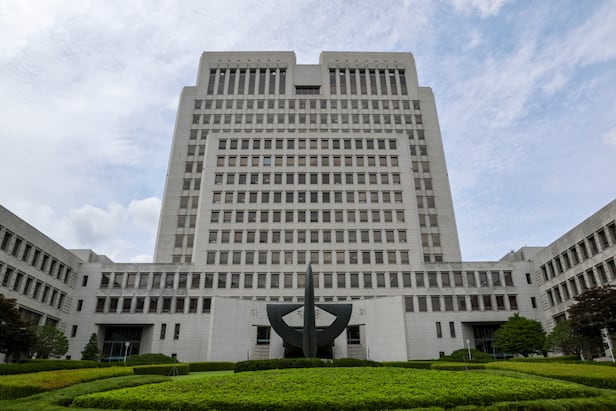
The Supreme Court’s First Division (Presiding Justice Ma Yong-ju) on the 16th upheld a lower court’s ruling sentencing Qing, charged with violating the Military Secrets Protection Act, to five years in prison and ordering the confiscation of 4.5772 million Korean won.
◇“U.S. military or THAAD data are best”
The organization Qing joined was the so-called “Ken Jake,” an intelligence unit under the information bureau of the People’s Liberation Army’s Lian JCS Department. The Lian JCS Department is the Chinese equivalent of South Korea’s Joint Chiefs of Staff.
Qing, a native of Shandong Province, had studied language in South Korea, earned a master’s degree in film, and worked as a professor at a Chinese university. He became involved in espionage in 2022. Under the direction of Ken Jake operative A, whom he met during studies in Taiwan, he reported on anti-China and pro-Taiwanese independence groups and joined hobby clubs frequented by politicians to recruit them.
Ken Jake began targeting South Korean military personnel in late 2022. Operative A introduced himself in a KakaoTalk open chat room as a “military researcher” and “researcher at the Singapore International Research Institute” to approach individuals posing as active-duty soldiers.
In July 2023, A told an undercover investigator from the Defense Counterintelligence Command, disguised as an active-duty soldier, “I’m participating in a Chinese defense research project” and offered “cash payments of over 2 million Korean won for Level 3 secrets and over 4 million Korean won for Level 2 secrets.” He deposited 3.5 million Korean won upfront to build trust.
Subsequent demands grew bolder. A stated, “Publicly available data is useless,” requesting materials on ROK-U.S. joint operations, training evaluations, and U.S. military and Japanese Self-Defense Forces-related information. Specifically, he asked, “U.S. military-related data is best,” “Do you have sensitive operational plans?” and “THAAD data is good,” seeking Level 2 and 3 secrets. The undercover investigator received 5 million Korean won in cash and handed over four fake military secrets.
◇Meeting in Jeju…“We’re being patriotic”
To verify long-term transaction feasibility, Ken Jake sent an operative to South Korea. Qing, fluent in Korean and familiar with the country, was chosen.
Qing entered Jeju Island in May 2024 under orders to build trust with the target. Though his wife was studying in South Korea at the time, he avoided meeting her. When she expressed concern, he said, “I’m going on a mission,” and “Don’t worry, we’re being patriotic.”
At a Jeju pensione, Qing met the undercover investigator, claiming to work at the same institute as A, and said, “If you want to travel or visit places, I can cover the costs.” The investigator requested a list of desired materials, pricing, and identity protection at the Chinese government level. Qing promised to relay this to A.
Days later, another Ken Jake courier retrieved a hidden USB drive at the pensione. It contained five fake military secrets, including an analysis of North Korea’s strategic weapons development. The courier left 5,000 U.S. dollars and a USB drive for future transactions.
The organization expanded operations. Qing reentered Jeju in July 2024, placing 5,000 U.S. dollars and a secure phone in a steel safe for covert communication. When the undercover investigator refused to send materials, citing dissatisfaction with the transaction method, the group sought a monthly fixed payment system. Qing proposed sending a preloaded card from China, sharing the PIN, and withdrawing funds via Korean ATMs.
Qing’s third entry was in March 2025. He inspected toilet stalls in Jeju facilities, measuring widths and counts, and reported to A to identify discreet handover locations. Days later, at a Jeju building, he received a USB drive with two fake military secrets, including “Analysis of North Korea’s New-Type Guided Missile Development and Threats,” and handed over a gift bag with a Galaxy tablet PC. Qing was arrested on the spot. The Seoul Central District Prosecutors’ Office, which took over the case from the Defense Counterintelligence Command, indicted him in April of that year.
◇“I thought it was a voice phishing investigation”
During trials, Qing argued that since the Defense Counterintelligence Command used undercover tactics from the start, no actual secrets were at risk. However, the court ruled that the Chinese organization believed they were dealing with an active-duty soldier, specifically requesting Level 2 and 3 secrets while providing money and equipment, posing an objective risk of leaks.
The first trial court stated, “This crime poses a serious threat to South Korea’s national security,” sentencing Qing to five years. The sentence reflected that no actual secrets were leaked and Qing did not play a leading role.
In the second trial, Qing claimed he believed he was investigating a Chinese voice phishing ring. He submitted cooperation letters from the Chinese Armed Police Force and a university business trip confirmation to prove this.
However, the second trial court dismissed this, stating, “It’s hard to accept that a civilian would secretly meet an active-duty soldier in South Korea to investigate voice phishing.” The court also noted that Ken Jake, as a state-affiliated intelligence group, could easily forge official documents. The second trial rejected both Qing’s and the prosecution’s appeals, and the Supreme Court upheld this ruling.